Categories
Alcohol Problems

How Long Does it Take to Detox from Alcohol?

You’ve reached a point, where you just had enough and decided to get rid of alcohol addiction once and for all or someone else made the decision for you, but now you are wondering how long would it take for you to detox your body of alcohol and how to get rid of addiction? Well, the good news is it won’t take too long. While an average person needs four to five days to completely detox from their last drink, it’s not the same for everyone and that’s because it depends on a couple of factors.

Those who drink heavily will obviously need a lot more time. Take a minute or two to learn what those factors are and if there’s any way you can speed up the alcohol detox process. In the end, we will also talk about rehab and how you can get the full benefits of their programs to get rid of alcohol addiction if you have one. Call Now at (888) 616-3179 to safely detox from the Alcohol.

Why is it Hard To Detox From Alcohol?

The answer is Alcohol Withdrawal Symptoms. When you drink regularly, your body begins to build up a tolerance. Due to increased tolerance, you will need to drink more to get the same “drunk” state. As tolerance levels keep on increasing, it will become harder and harder to get drunk and so you will have to keep increasing the amount of alcohol you take. This is how you get addicted to alcohol and so quitting alcohol is even harder than ever. Once tolerance builds up, you will go through a series of symptoms when you try to quit and these symptoms are called “Withdrawal Symptoms.”

The symptoms can get so bad that the user may feel this drinking is better than trying to quit which is totally not true. Yes, the withdrawal symptoms will be bad, but they are temporary and won’t bother much once your detox is complete. It’s just a nuisance that will have to go through once and you will be sober, but it’s not something that you can handle at home. Only the staff at alcohol detox treatment centers are trained to handle such alcohol withdrawal. But what are these alcohol withdrawal symptoms? Let’s take a look.

Alcohol Withdrawal Symptoms

Alcohol withdrawal symptoms begin to manifest when an alcohol addict goes without alcohol for a few hours. Here are some of the major alcohol withdrawal symptoms.

  • Anxiety
  • Depression
  • Nausea
  • Sweating and/or high body temperature
  • Irritability
  • Rapid heart rate and/or tremors
  • Hallucinations
  • Paranoia and/or illusions
  • Seizures

Some of the symptoms are not so bad, while others can be extremely dangerous, especially if the user begins to see hallucinations or has seizures. If that’s the case, it’s important that you take the user to a hospital or a detox center immediately. Just search “alcohol detox centers near me,” and go to the one that’s the closest. With that said, let’s take a closer look at the alcohol detox timeline.

Alcohol Detox Timeline

how long to detox from alcohol

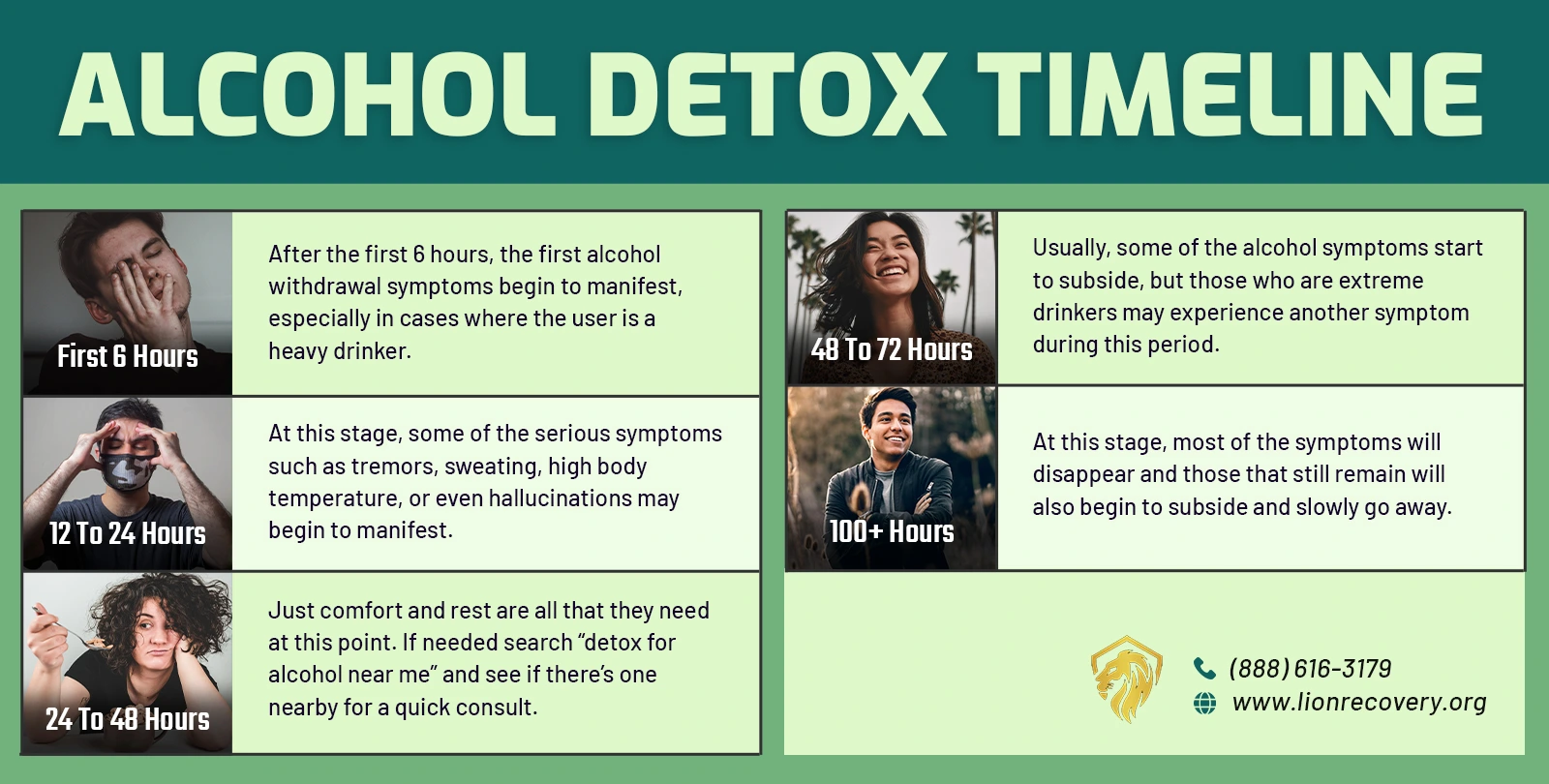
Here’s a general timeline of what happens when alcohol detox programs begin their work.

  • First 6 Hours

After the first 6 hours, the first alcohol withdrawal symptoms begin to manifest, especially in cases where the user is a heavy drinker.

  • 12 To 24 Hours

At this stage, some of the serious symptoms such as tremors, sweating, high body temperature, or even hallucinations may begin to manifest. They may begin to see things or people who are not really there. The user may start to feel like they are hearing a voice or someone’s calling them, but it’s important that they stay confined for their own safety as well as the safety of others.

  • 24 To 48 Hours

This is when their alcohol withdrawal symptoms will be at their peak. Upset stomach, headache, nausea, etc. will be common at this stage and there’s not much that can be done at this stage. Just comfort and rest are all that they need at this point. If needed search “detox for alcohol near me” and see if there’s one nearby for a quick consult.

  • 48 To 72 Hours

Usually, some of the alcohol symptoms start to subside, but those who are extreme drinkers may experience another symptom during this period called delirium tremens. It can severely increase the heart rate, and body temperature and can even cause tremors.

  • 100+ Hours

At this stage, most of the symptoms will disappear and those that still remain will also begin to subside and slowly go away.

How To Detox From Alcohol?

As you can see, the number of symptoms that a user will go through can be very dangerous and an ordinary person cannot deal with this. The best way to detox from alcohol is to get into an Residential Detox Treatment program. Only the staff at detox centers are trained to handle these situations and know what to do if something goes wrong. Try going for the Lion Recovery, An Alcohol rehab Center in Southern California initially as they are the best alcohol detox programs.

How Long to Detox From Alcohol?

So, how long does it take to detox from alcohol? Typically, with an average alcohol addict, 3 to six days, but that will increase depending on their drinking patterns such as how many times they drink each day, the amount of alcohol they drink each time, and how long they have been drinking.

Read More Alcohol Addiction Stories:

Categories
Alcohol Problems

Is It OK to Reject Drink from My Friend in Social Events?

Have you ever been in a situation where you had to say no to alcohol while your friends had plenty? Maybe your parents instructed you not to. Or, maybe because it was late and you had to wake up early in the morning for work. Or, maybe you are trying to quit alcohol and don’t want a relapse. Whatever the case may be, we have all been there at one point in our lives and we know how hard it is to reject the drink, especially at social events.

But why can’t you drink? Why is it okay for your friends to drink alcohol but not you? Why can’t I relieve some stress by drinking? Yes, it’s true that drinking will relieve stress, but it’s not okay to drink on a regular basis. Let’s face it, no matter how happy you are, you will have to face stress every once in a while, but you can’t go for a drink every time you feel a little stressed. That’s how you get addicted. Alcohol addiction is one of the worst addictions and if you build up a tolerance, then it will get even worse. There are various benefits of quitting alcohol.

As for why it is okay for your friends to drink but not you, well that’s where you are wrong. It’s not okay for friends either, but it’s their life and if they choose to have a drink, then it’s their choice and there’s not much you can do. What you can do is make the choices that are right for you by choosing not to drink and maintaining good health. If you just want to relieve some stress, there are other ways of doing it than drinking.

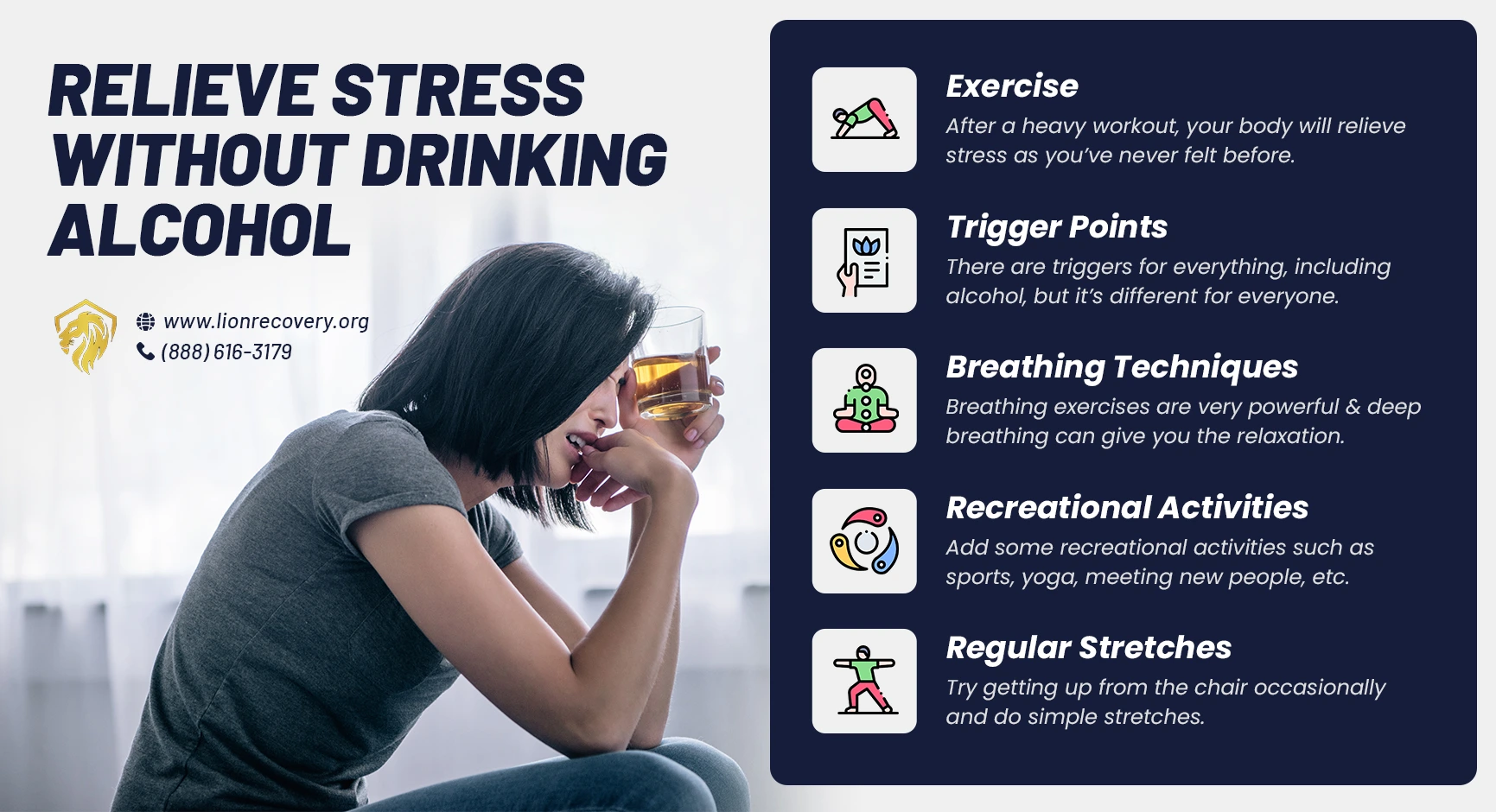
Relieve Stress Without Drinking Alcohol

Unlike popular belief, there are other ways of relieving stress without drinking alcohol. Lets’ begin.

rejecting a drink socially

  • Exercise

After a heavy workout, your body will relieve stress as you’ve never felt before. Exercises such as pushups, sit-ups, weight lifts, chin-ups, and running, among other activities are some of the best stress-relieving exercises. Not to mention, you will also lose any extra weight, gain muscles and become much healthier.

  • Understand Trigger Points

There are triggers for everything, including alcohol, but it’s different for everyone. For some, heavy work triggers the need to drink alcohol, while for others, it’s after a stressful situation. Your goal is to understand how your trigger points get triggered and help remedy it by doing exercises and depth breathing exercises.

  • Deep Breathing Techniques

Breathing exercises are very powerful and deep breathing can give you the relaxation you need, which will prevent you from reaching out for a glass of alcohol.

  • Add Recreational Activities In Your Life

Many people working for corporates get sucked into a state of life, where their only activities are work, food, tv, and sleep and it repeats every day. This is particularly bad as there’s no way for one to relieve stress. Add some recreational activities such as sports, yoga, cooking, meeting new people, etc. to bring the fun back to your life.

  • Regular Stretches

If your work involves long hours of sitting in front of a camera, then you are bound to stress. Sitting in the place for too long reduces proper blood flow to all of your body parts. So, try getting up from the chair occasionally and do simple stretches.

How To Say No To Drinks When You Don’t Want To?

You will find yourself in situations, where you are at an event or party, and you will come up to you and hand you over a drink. It can be very hard to say no to drink, especially at social events. You will begin to wonder what if they don’t take it very well or feel hurt that you denied and even if you manage to say no, chances are they will say something like, “One drink is no big deal,” or “Come on, drink with us.” But, at the end of the day, you have to think about yourself. So, gather the courage to say no. Here are some examples-

  • I’ve to drive home later (the ultimate excuse).
  • No thanks, I just finished one.
  • I have to keep a clear head today.
  • I just quit alcohol.

Conclusion

It’s okay to say no to alcohol even when all your friends are having some. It is for your benefit only and keeps all the consequences of drinking alcohol at bay. Not to mention, you will live a far healthier life.

Categories
Alcohol Problems

What are the Health Risks of Mixing Ritalin and Alcohol?

Ritalin can have several benefits for those suffering from attention deficit hyperactivity disorder (ADHD), however, the moment it is abused and mixed with alcohol, several health risks develop for the user. Ritalin and alcohol should never be mixed as they can cause dangerously serious outcomes. Here is everything to know on the health risks of mixing Ritalin and alcohol. 

What is Ritalin?

Ritalin is a prescribed medication used to treat symptoms of ADHD. It is classified as a central nervous system stimulant and works by increasing certain chemicals in the brain, known as dopamine and norepinephrine. These chemicals are linked with control, attention, and pleasure in the brain. When used appropriately, Ritalin can help the user pay better attention, stay focused, and control any problematic or disruptive behavior. 

ADHD is a commonly diagnosed mental health disorder among children, and Ritalin effects can help to increase self-esteem, increase the ability to think more clearly and improve behavior in social interactions. 

While Ritalin can be an effective tool for treating ADHD, it is often abused which can lead to extremely dangerous effects. 

Is Ritalin Dangerous for Health?

Each person is going to react to Ritalin differently and when used as prescribed, your doctor will be able to help monitor any potential side effects of dangerous health issues associated with Ritalin use. Mild side effects of Ritalin include headaches, agitation, mood swings, anxiety, nausea, reduced appetite, and difficulty sleeping. 

The serious side effects include: 

  • Increased blood pressure and heartrate 
  • Psychiatric reactions including the development of new psychiatric disorders
  • Erectile issues for men 
  • Poor circulation 
  • Cardiovascular issues including sudden stroke, heart attack, or death 
  • Growth suppression in children  

The risk of developing drug dependence and further drug abuse and addiction is another serious health risk associated with Ritalin use. It must be noted, that the side effects can increase and worsen when Ritalin and alcohol are mixed. 

Mixing Ritalin and Alcohol

Both Ritalin and alcohol are at risk of being abused and when these drugs are combined, the risks are greatly increased. Ritalin is a central nervous system stimulant while alcohol is a central nervous system depressant. This means that while Ritalin is working to increase bodily functions (heart rate, blood pressure, etc.), alcohol works to slow the body down. 

Although it can be assumed that the two drugs might cancel the other out, this is not the case. Mixing Ritalin and alcohol can lead to alcohol poisoning, drug overdose, and painful withdrawal symptoms. 

Signs and Symptoms of Ritalin and Alcohol Abuse

The signs and symptoms of Ritalin and alcohol abuse might look similar to other forms of drug abuse. Any type of Ritalin use without a prescription is considered abuse. Other signs of Ritalin abuse include: 

  • Hyperactive and euphoric state of mind
  • Loss of appetite and weight loss
  • Fast heart rate 
  • Increased blood pressure 

Signs of alcohol abuse include: 

  • Euphoric state of mind
  • Impaired judgment 
  • Loss of coordination and lack of inhibition 
  • Self-destructive behavior 

When someone has begun mixing and abusing Ritalin and alcohol you can expect to see the listed signs and symptoms as well as drastic changes in behavior, mood, appetite and weight loss, and overall mental wellbeing. 

Ritalin and Alcohol Side Effects

Ritalin and alcohol should never be mixed and if dangerous side effects are presented in the user, 911 must be contacted immediately to prevent drug overdose, alcohol poisoning, or death. Side effects of Ritalin and alcohol use include: 

  • Memory problems 
  • Dangerously high energy 
  • Self-destructive behavior 
  • Reduced alcohol sensitivity 
  • Impaired judgment 
  • Dramatic changed to diet and appearance 
  • Damage to major organ systems 

Alcohol poisoning and drug overdose can result in coma or death and medical attention must be sought out immediately to ensure the safety of the using individual. 

How to Withdrawal Ritalin and Alcohol from Your Body?

Ritalin and alcohol abuse can increase the chances of developing tolerance and dependence, in which case, the user is likely to experience withdrawal symptoms once they stop the use of both drugs. Withdrawal symptoms include: 

  • Increased anxiety 
  • Sweating 
  • Tiredness 
  • Nausea and vomiting 
  • Depression 
  • Difficulty sleeping 

Through a supervised detox program or an addiction recovery treatment center, you will be able to remove the drugs and alcohol from your body and break free from the drug abuse. If you are struggling with substance abuse or alcohol addiction, contact Lion Recovery (888-616-3179) today to learn more about the best treatment options for you. 

Citations

Health Line. “The Effects of Mixing Ritalin and Alcohol.” 

https://www.healthline.com/health/adhd/ritalin-and-alcohol#qampa Reviewed 11, March 2019

Medical News Today. “What are the Effects of Ritalin?” 

https://www.medicalnewstoday.com/articles/ritalin-effects 4, November 2020

American Addiction Center. “Concurrent Alcohol and Ritalin Abuse.” 

https://drugabuse.com/taking-drugs-alcohol/ritalin/ 25, November 2018 

Categories
Alcohol Problems

The Dangerous Effect of Mixing Baclofen and Alcohol

Alcohol is such a normal part of today’s modern society, that we often are unaware of the danger of mixing certain medications with it. Alcohol is a depressant, and when mixed with other central nervous system depressants, it can result in highly dangerous situations such as coma or even death. 

One drug in particular that has the potential of being dangerous when mixed with alcohol is Baclofen. Here is everything to know about Baclofen and the dangers of mixing Baclofen and alcohol. 

What is Baclofen?

Baclofen is a prescribed medication, used to help treat various muscle disorders such as muscle spasms, pain, and stiffness. This medication is also known by the brand names Gablofen and Lioresal. Baclofen belongs to the drug class known as skeletal muscle relaxants. Baclofen is a central nervous system depressant and has been proven to help alcohol withdrawal, however, it can be highly dangerous to mix the two substances. 

Is Baclofen Addictive?

Baclofen produces a pain-relieving and relaxing feeling which is both desirable effects for many drug users. When taken on its own as prescribed, Baclofen has not been known to be addictive, however, once it is abused the user has a high chance of developing dependence and becoming addicted. 

Baclofen abuse means taking it without a prescription, taking an excessive amount, and mixing it with other drugs to enhance the feelings. When used recreationally, Baclofen abuse can result in an overdose and become fatal. Medical attention must be sought out immediately if someone is presenting signs of a drug overdose. 

Baclofen Withdrawal Symptoms

After Baclofen has been abused, the user is likely to experience uncomfortable and dangerous withdrawal symptoms once they stop the use of the drug addiction. Withdrawal symptoms can be painful and result in severe health complications therefore seeking help from a professional detox center is always advised. 

Baclofen withdrawal symptoms include: 

  • Return of muscle spasms, muscle pain, and stiffness 
  • Excessive itching 
  • Lightheadedness
  • Low blood pressure 
  • Tingling sensations throughout the body 
  • High fever
  • Mood swings 

In severe cases, the withdrawal symptoms can include loss of bodily functions and death. 

Why is Alcohol Combined with Baclofen?

Baclofen and alcohol are often combined to enhance the feeling the drugs create. Both alcohol and baclofen are central nervous system depressants, and when they are combined, the effects of the Baclofen will be heightened. Most people mix alcohol and Baclofen to have both the depressant effects of alcohol and the muscle relaxant effects of Baclofen. 

What Happens When Baclofen and Alcohol are Mixed?

When Baclofen and alcohol are mixed, the effects in the central nervous system are greatly increased. The user is likely to experience feelings such as extreme drowsiness, dizziness, agitation, confusion, and extreme weakness. In more severe cases, mixing Baclofen and alcohol can result in seizures, and raised blood pressure or heart rate. The more dangerous side effect of mixing Baclofen and alcohol is the potential of a drug overdose which can result in death.

Symptoms of Baclofen Overdose

When too much Baclofen has been consumed, or if mixed with other substances, specifically alcohol, the user may overdose. A drug overdose is a serious medical concern that requires professional treatment. Signs of a Baclofen overdose include: 

  • Delirium or extreme confusion
  • Respiratory depression 
  • Seizures 
  • Coma 
  • Death 

How Does Baclofen Treat Alcoholism?

There has been a lot of controversy over whether or not Baclofen treats Alcoholism, and it seems further research is still needed to truthfully answer this question. However, in several other countries, Baclofen is used to help treat Alcoholism and Alcohol Use Disorder. At this point, there have not been enough scientific studies throughout the United States to prove this to be true. 

What Should You Do if You Have Already Mixed Them?

If someone is showing dangerous side effects after mixing Baclofen and alcohol, medical supervision should be contacted immediately to prevent a dangerous and possibly deadly overdose. Baclofen and alcohol should never be mixed due to the high risk of potentially harmful and fatal outcomes. 

Treatment for Baclofen and Alcohol Use

If you or someone you know are seeking treatment after mixing Baclofen and alcohol, contact a medical professional immediately to ensure a safe recovery. Mixing these substances is highly dangerous and can result in seizures, coma, or death. Lion Recovery is an addiction recovery center located in Southern California that can help support you throughout your substance abuse journey. Lion Recovery provides quality care for those seeking addiction recovery. Contact us today at 888-616-3179 to learn more about the various programs offered.

Citations 

American Addiction Center. “Dangers of Mixing Baclofen and Alcohol.” 

https://americanaddictioncenters.org/alcoholism-treatment/mixing-with-baclofen Reviewed 7, January 2022 

Addiction Center. “Baclofen Addiction and Abuse.” 

https://www.addictioncenter.com/drugs/baclofen/ Revived 8, November 2021 

Categories
Alcohol Problems

Everything You Need to Know About Alcohol Sweats and Withdrawal

While sweat is an important and essential component to our body’s cooling system, sweating a lot during the night or persistent sweating may be a sign of something else.

Have you ever woken up during the night after drinking alcohol and have found yourself in a pool of sweat? If this has occurred or is occurring, you may be suffering from alcohol night sweats. Alcohol sweats can happen if you are addicted to alcohol, moderately drink, or have had only one drink.

Alcohol night sweats happen after drinking and occur during alcohol withdrawal. Alcohol Withdrawal can also occur at any point after drinking and may make you feel agitated, irritable, and will cause other symptoms that may be life threatening.

How Does Alcohol Cause Night Sweats?

When you consume alcohol, your central nervous system becomes affected as well as your circulatory system and many other parts of the body. Alcohol consumption causes your heart rate to go up and will widen your blood vessels thus increasing perspiration.

So, by drinking alcohol your body changes mentally and physically and will cause you to sweat more. Another way alcohol sweats occur is when you are withdrawing from drinking.

What else can cause night sweats(Alcohol Sweats)?

  • Menopause
  • Low blood pressure
  • Fever
  • Some antidepressants or steroids

If you have any predetermining symptoms and you are drinking alcohol, you put yourself at an increased risk for alcohol sweats.

Are Night Sweats a Symptom of Alcohol Withdrawal

Alcohol withdrawal can bring on severe symptoms if you binge drink or drink heavily. Symptoms start within a few hours after your last drink or even days within your last drink. Some of these symptoms can cause sweating during the night after drinking alcohol. When you are going through alcohol withdrawal you may develop a fever which can make you sweat.

Excessive sweating after drinking alcohol is typically a sign of alcohol withdrawal with heavier users. While these symptoms can be dangerous and painful, medical detox is available to go through alcohol withdrawal safely and with less discomfort.

What are the common symptoms of sweating out alcohol during alcohol withdrawal?

  • Nausea
  • Headaches
  • Shakiness
  • Body aches/ muscle pains
  • Nightmares
  • Loss of appetite
  • Fatigue
  • Restlessness
  • Difficulty sleeping
  • Fever

While these symptoms are generally mild, more severe symptoms may occur and can be lethal. Medical Detox is a great way to treat alcohol withdrawal and reduce sweating and other symptoms. Night sweats with alcohol withdrawal or detox can last many days or even weeks and should be monitored.

Severe Symptoms

If mild symptoms persist and become more severe, you should get medical help immediately. Withdrawing from alcohol can be life threatening especially with individuals who are chronic heavy users. More severe symptoms of alcohol withdrawal include vomiting, rapid heartbeat, heart palpitations, high blood pressure, changes o respiratory rate, tremors, and confusion.

Is sweating a sign of alcoholism?

If you drink heavily and chronically you may already know you have a substance abuse problem. Sweating heavily can be a sign of alcoholism especially if you are struggling with other symptoms above.

Symptoms of Delirium Tremens

Delirium tremens often occur when an individual is going through severe alcohol withdrawal. They may cause you to feel very confused off an on and can bring on a severe fever, making you sweat profusely.
Individuals with delirium tremens show signs of:

  • Hallucinations
  • Seizures
  • Body Tremors
  • Changes in mental function
  • Confusion and disorientation
  • Deep sleep for days at a time

Delirium tremens typically occur 48 to 96 hours after your last drink and may occur after ten days from your last drink. Other signs to look out for are decreased attention span, severe night sweats, excitement, fear, increased activity, sensibility to light/touch/sound, sleepiness, fatigue, and irritability.

Also Read: The Ultimate Risks of Mixing Seroquel and Alcohol and Why You Should Not Do That

Effects of Alcohol Sweats on the Body

Naturally your body sweats as its way to keep your body temperature regulated whether you are exercising, outside on a hot day, or even when you consume alcohol. You may have asked yourself before why do I sweat when I drink alcohol? The more alcohol you consume, the more your blood vessels begin to widen thus causing the reaction of sweating.
As you drink alcohol, your body starts to digest while your liver creates heat while metabolizing the alcohol, causing you to feel warm. While it may create this sense of warming, it is your body working to lower your body temperature.
It is also possible for you to develop hot flashes after a heavy night of drinking. Hot flashes are generally a sign that your body need to cool down and they may appear suddenly. When it comes to alcohol, hot flashes may be a result to abnormal changes in your body’s core temperature.

Alcohol Intolerance and Night Sweats

Do you often find yourself sweating when drinking alcohol, even if you rarely drink? You may be suffering from alcohol intolerance. Alcohol intolerance is a genetic mutation that causes your body to not produce the correct enzymes to metabolize and break down toxins in alcohol.
Alcohol induced night sweats have been shown to be caused by alcohol intolerance. Symptoms of alcohol intolerance include:

  • Facial Redness
  • Hives
  • Worsening Preexisting Asthma
  • Runny or stuff nose
  • Low blood pressure
  • nausea, vomiting, and diarrhea

How can you reduce or eliminate alcohol sweats? The best way to stop alcohol sweats when you have alcohol intolerance is to severely limit your drinking or to not drink at all.

Does Alcohol Raise Body Temperature?

When you drink alcohol, you may start to become flush or red in the face and start to feel warm. Alcohol consumption causes your liver to warm and will make you feel warm, but it is actually working to lower your body temperature.
Alcohol does not raise your body temperature although it may feel this way. Alcohol will in fact raise your blood pressure and heart rate.

Why Does Alcohol Make You Sweat?

Alcohol makes you sweat so it can cool your body down while it breaks down the alcohol in your system. Many individuals who drink often or heavily will complain of night sweats. Can you sweat out alcohol? Not really, in fact night sweats do not eliminate alcohol for your system quicker.
Alcohol withdrawal is usually a big reason for night sweats and night sweats should not be looked at as a way of detoxing from home. Detoxing from alcohol without medical supervision can be life threatening and very discomforting and painful.

Why Do I Sweat A lot After Drinking Alcohol?

The reason for sweating after drinking alcohol has to do with your body’s digestion process after consuming alcohol. If you have asked yourself does alcohol cause night sweats? You may have already been dealing with other occurring symptoms from drinking heavily.
Other factors for alcohol night sweats include:

• Individuals’ genetics
• Weight
• Preexisting conditions
• Cancer
• Menopause
• Chronis illnesses
• Flus or colds
• Antidepressants or steroids

So now that we know alcohol does in fact make you sweat depending on the individual and their level of drinking, genetics, and other factors, it may be time to ask how long do alcohol sweats last?
Alcohol sweats can persist for up to a few days or even weeks. When detoxing from alcohol, you may also suffer from daytime sweating, hot flashes, goosebumps, chills, insomnia, high blood pressure, and anxiety.

Also Read: How Alcohol Abuse Treatment Plans Can Help Your Loved One

Can Drinking Alcohol Cause Hot Flashes?

Drinking alcohol does not only cause night sweats but can also bring on episodes of hot flashes, especially in women who are going through menopause and drinking heavily. Heavy chronic alcohol consumption brings on sweating, skin irritations, cancer, depression, and more.
How can you lessen hot flashes and night sweats?

The best way to decrease sweating induced by alcohol is to stop drinking or to limit your drinking. Maintaining a healthy diet, drinking enough water and getting enough exercise are also essential in keeping your core body temperature regulated and can also reduce heavy perspiration from drinking.

How Are Night Sweats Different from Hot Flashes?

Hot flashes and night sweats are quite different but may be co-occurring. Hot flashes may happen at any time of the day or night, you may even be able to feel a hot flash coming. Many individuals have described hot flashes as something that happens like a wave, it immediately comes over you out of no where and you feel hot and sweaty and may even feel nauseas or like you may pass out.

Hot flashes don’t last very long but can come and go and may feel overwhelming. Night sweats happen while you sleep and can be so uncomfortable that you wake up during the night to a pool of wetness in your bed. The unfortunate thing abut night sweats is that they last longer than hot flashes and may last up to ten minutes at a time.

While both differ, they cause the same sweating reaction to the body and can cause pain and discomfort and can also disrupt sleep or daily life.

How Can Lion Recovery Help You to Deal with Alcohol Sweats?

Is it possible that you are alcohol dependent? Alcohol dependence may look like:

• Continuing to use despite harmful effects
• Drinking more now than you used to
• Making more and more time to drink
• Tolerance for alcohol
• Withdrawing from alcohol
• Spending less time doing important things like work or school
• Withdrawing from family and friends to drink

If you have suffered from alcohol induced night sweats and any symptoms above, it may be time to consider getting help for your alcohol addiction. Lion Recovery is your one stop shop to starting recovery because they offer interventions, medical detox, and aftercare plans! Lion Recovery understands that there are so many critical steps to recovery and provide safe and comforting resources to help you get started.

Visit Best Recovery Center In California – Lion Recovery by following this link or call them right now to find out more information on their varying programs for alcohol addiction at (888) 616-3179.

Categories
Alcohol Problems

The Ultimate Risks of Mixing Seroquel and Alcohol and Why You Should Not Do That

Are there risks to mixing alcohol with other sedative substances? Is it possible to overdose on Seroquel and alcohol? The answer to these questions is, yes! Seroquel is prescribed to treat significant mental illnesses such as schizophrenia. When alcohol is consumed while taking Seroquel, you become much more drowsy and very confused.

It is also possible to feel the Effects of Alcohol in a shorter period of time when taking Seroquel. Mild to severe alcohol use comes with its own varying side effects and these in conjunction with the side effects of taking Seroquel can lead to sudden death from low and irregular heartbeat.

Due to the severity of the side effects of Seroquel and alcohol, it’s crucial to avoid alcohol at all costs while taking Seroquel.

What Will be the Side Effect of Mixing Seroquel and Alcohol?

When taking an antipsychotic medication like Seroquel, it’s important to know what side effects come with taking this drug as well as the side effects involved when taking other drugs in combination with Seroquel.
Seroquel medication is prescribed to schizophrenia patients. When an individual has schizophrenia, symptoms may include:

  • Hallucinations
  • Delusions
  • Disorganized Thinking
  • Decreased want to be around other people
  • Problems speaking clearly
  • Lack of motivation

Consuming alcohol when you have a mental illness and are on medication can make the illness much worse, especially for schizophrenia patients. The interaction between Seroquel and alcohol can be extremely dangerous and lead to severe cognition problems, suicide, and death.

What is Seroquel?

Seroquel is the generic brand name for Quetiapine and is prescribed for patients with schizophrenia. Quetiapine acts as an antipsychotic and works by rebalancing dopamine and serotonin neurotransmitters in the brain to improve thinking, mood, and behavior.
What else does Seroquel treat?

• Manic Episodes from Bipolar Disorder
• Depressive Episodes from Bipolar Disorder
• Long Term Treatment of Bipolar Disorder
• Major Depressive Disorder
• Delusional Parasitosis
• Post-Traumatic Stress Disorder
• Anxiety Disorders

It’s best to avoid alcohol and other drugs when taking Seroquel because the use of other drugs may interact with the Seroquel increasing your sedation and causing more mental confusion.

Also Read: How Alcohol Abuse Treatment Plans Can Help Your Loved One

What Are the Side Effects of Seroquel?

Seroquel is for people who need long term treatment for schizophrenia. It is very possible to overdose on this medication and it can create mild to severe adverse effects.
Some of the most common side effects of using Seroquel include:

  • Increased Blood Pressure
  • Increased Heart Rate
  • Extrapyramidal Symptoms
  • Drowsiness
  • Headache
  • Agitation
  • Dizziness
  • Fatigue
  • Weight Gain
  • Dry Mouth
  • Constipation
  • Increased Glucose
  • Increased Appetite
  • Cholesterol Abnormalities

It’s important to talk to your doctor about what to avoid when taking this medication especially in conjunction with other medications, even herbal or natural ones.

Are There Any Serious Side Effects?

Seroquel comes with some rare but serious side effects with long term usage. Seroquel can increase the blood levels of prolactin and when this happens its possible that females will lose their period as well as milk production while males lose their sex drive and may develop erectile problems.
With long term use and prolonged increased levels of prolactin, osteoporosis can occur as well as an increased risk for bone fractures. Furthermore, this drug can also affect your muscles causing restlessness, uncontrolled jerk movements, tremors, and stiffness.
Other serious symptoms include:

• Impaired core body temperature regulation
• Dehydration
• Weight gain
• High blood sugar
• High cholesterol

It’s also important to note that antipsychotic medications carry the risk for sudden cardiac death caused by an irregular heartbeat.

How Does Alcohol Interact with Seroquel?

Alcohol interacts with Seroquel by increasing the symptoms of Seroquel causing extreme drowsiness, confusion, low blood pressure, as well as cognitive problems and motor skill problems.
You become much more sedated and feel the effects of alcohol much quicker, this can be very dangerous to your body and can make it extremely difficult to interact with others, get work done, take care of yourself, and may increase harm on to others if you took this combination and attempted to operate heavy machinery.
The interaction between Seroquel and alcohol is lethal and extremely dangerous. Medical professionals suggest avoiding all forms of alcohol when taking antipsychotics.

Is it Safe to Drink Alcohol While Taking Seroquel?

It is never a good idea to drink alcohol while taking Seroquel Combining Seroquel and alcohol can lead to coma and death. According to the National Institute on Alcohol Abuse and Alcoholism, 95,000 people die each year from alcohol abuse alone.
Doctors consider it to be extremely unsafe to combine alcohol with antipsychotics like Seroquel and will typically advise against it. The high from mixing Seroquel and alcohol can be extremely deadly.
It’s also important to be aware that some medications contain alcohol such as certain nasal sprays and cold medicines. Always talk to your doctor before taking any other medications while on Seroquel.

Alcohol and Seroquel Serious Side Effects

Serious side effects will develop if you decide to consume alcohol while taking Seroquel. If taking more than prescribed, you can reach toxic levels that can force you to stop breathing.
Some of the more serious effects of Seroquel and alcohol include:

• Extreme psychosis in elderly patients
• Neuroleptic malignant syndrome
• Extrapyramidal symptoms
• Increased suicidal thoughts
• Heart disease
• Hypotension
• Stroke

It is also possible to experience withdrawal symptoms when using Seroquel and alcohol together. Withdrawal symptoms look and feel like:

  • Stress and anxiety
  • Social withdrawal
  • Headaches
  • Pain
  • Sinusitis
  • High Blood Pressure
  • Agitation
  • Nausea
  • Drug Dependence
  • Joint Pain

Mixing alcohol with antipsychotics can also put you at risk for internal bleeding and breathing problems that can become very dangerous if not treated.

Also Read: Top Qualities of the Best Alcohol Drug Rehab Centers in California

Dangers of Alcohol

Drinking in excess whether it be over a long period of time or in a short period, has lasting adverse effects and reactions to the brain, heart, liver, and pancreas and increases your risk for several cancers. Alcohol also weakens your immune system making it easier for you to become sick or develop diseases.

Short Term Effects of Alcohol:

• Injuries including falls, car accidents, and burns
• Violence including homicide, suicide, sexual assault, and domestic abuse
• Alcohol poisoning
• Risky sexual behaviors that can result in HIV or other sexually transmitted diseases
• Miscarriages and stillbirth as well as fetal alcohol syndrome

Long Term Risks of Alcohol:

• High blood pressure, stroke, heart disease, liver disease
• Caner of the breast, mouth, throat, liver, colon, rectum, and voice box
• Weakening of the immune system
• Depression and anxiety
• Memory problems such as dementia
• Social problems such as family, school, work, etc.
• Alcohol dependence

There are certain individuals who should avoid alcohol including those who are under the age of 21, those who are pregnant, driving, taking certain medications such as antipsychotics or antidepressants, those who suffer from medical conditions and individuals recovering from alcoholism.

How Long After Taking Seroquel is it Safe to Drink?

Seroquel has a half life of six hours so after about 12 hours of taking the drug it will be almost completely out of your system. It’s recommended to wait at least a day and a half before consuming alcohol to make sure the Seroquel is completely out of your body.
Remember that Seroquel is used for long term treatment of schizophrenia and a great way to help treat your schizophrenia symptoms would be to completely eliminate the consumption of alcohol and focus on taking care of yourself mentally and physically.

How to Choose the Best Way to Recover from Seroquel and Alcohol Abuse

Have you or someone you loved been struggling with dual diagnosis? Substance abuse and mental illness can develop and create more problems in the long term. Co -occurring disorders can be treated with several types of therapies, detox from substances, rehab, and support group programs.

Is it time for you to enter treatment or find treatment for someone else? Lion Recovery provides services not only for detox but also puts together interventions for people needing treatment as well as relapse prevention.
Visit Lion Recovery at their website Best Recovery Center In California – Lion Recovery or call them now for more information on treatment and rehab services at (888) 616-3179.

Lion Recovery is a great option for individuals struggling with alcohol and Seroquel addiction. Recovery is possible and Lion Recovery is ready to help you get started.

Citations

(Quetiapine), S., 2021. Seroquel and Alcohol (Quetiapine) – Safety Medical. [online] Safetymedical.net. Available at: http://www.safetymedical.net/seroquel-and-alcohol.
Niaaa.nih.gov. 2021. Alcohol Facts and Statistics | National Institute on Alcohol Abuse and Alcoholism (NIAAA). [online] Available at: https://www.niaaa.nih.gov/publications/brochures-and-fact-sheets/alcohol-facts-and-statistics.
Niaaa.nih.gov. 2021. Alcohol’s Effects on the Body | National Institute on Alcohol Abuse and Alcoholism (NIAAA). [online] Available at: https://www.niaaa.nih.gov/alcohols-effects-health/alcohols-effects-body.
2021. [online] Available at: https://www.ehealthme.com/ds/seroquel/alcohol-withdrawal-syndrome/.
Alcohol Rehab Help. 2021. Can You Drink Alcohol While Taking Seroquel (Quetiapine)?. [online] Available at: https://alcoholrehabhelp.org/interactions/seroquel/.
Cdc.gov. 2021. Drinking too much alcohol can harm your health. Learn the facts | CDC. [online] Available at: https://www.cdc.gov/alcohol/fact-sheets/alcohol-use.html.
Niaaa.nih.gov. 2021. Harmful Interactions | National Institute on Alcohol Abuse and Alcoholism (NIAAA). [online] Available at: https://www.niaaa.nih.gov/publications/brochures-and-fact-sheets/harmful-interactions-mixing-alcohol-with-medicines.
Maan, J., Ershadi, M., Khan, I. and Saadabadi, A., 2021. Quetiapine. [online] Ncbi.nlm.nih.gov. Available at: https://www.ncbi.nlm.nih.gov/books/NBK459145/.
Parker, C., 2021. Seroquel and Alcohol (Quetiapine) – Drugsdb.com. [online] Drugsdb.com. Available at: http://www.drugsdb.com/rx/seroquel/seroquel-and-alcohol/.
Nami.org. 2021. Quetiapine (Seroquel) | NAMI: National Alliance on Mental Illness. [online] Available at: https://www.nami.org/About-Mental-Illness/Treatments/Mental-Health-Medications/Types-of-Medication/Quetiapine-(Seroquel).